Rock Churches and Thousand-Year-Old Frescoes
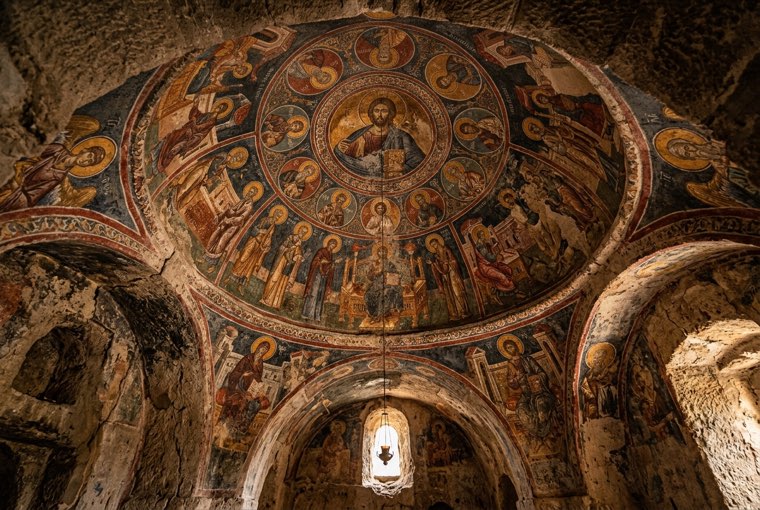
There are more than a thousand rock-cut churches and chapels in Cappadocia. Because tuff is easy to work, a community could carve its own place of worship within a few months. Most of these were made between the ninth and thirteenth centuries.
The frescoes were made with two different techniques. Early work is plain geometric patterns drawn in red ochre straight onto the rock face. Later work has a plaster layer applied to the wall and multicoloured scenes painted over it. The lapis lazuli used for blue cost more than gold at the time.
What damages the frescoes most is humidity and the carbon dioxide in visitors' breath, which is why many churches limit flash photography and large groups lingering inside. The best-preserved examples are the Dark Church in Göreme and the Çavuşin and Tokalı churches. Interiors are cool, so bring a layer.
Other Posts


Stay in Cappadocia
An unforgettable holiday awaits you in our stone rooms at Aşk-ı Nare Cave Hotel.
Book Now